
The Biefeld-Brown Effect: Science or Suppression?
How an asymmetric capacitor produces thrust — and why mainstream physics refuses to look deeper.

The Effect in Simple Terms
The Biefeld-Brown effect is deceptively simple: when you apply high voltage (tens of kilovolts) to an asymmetric capacitor — one with electrodes of different sizes — the device produces a net thrust toward the smaller electrode.
No fuel. No exhaust. No moving parts. Just electricity converted directly into motion.
Thomas Townsend Brown first observed this in 1921 with an X-ray tube, and spent the rest of his life trying to convince the world it was real.
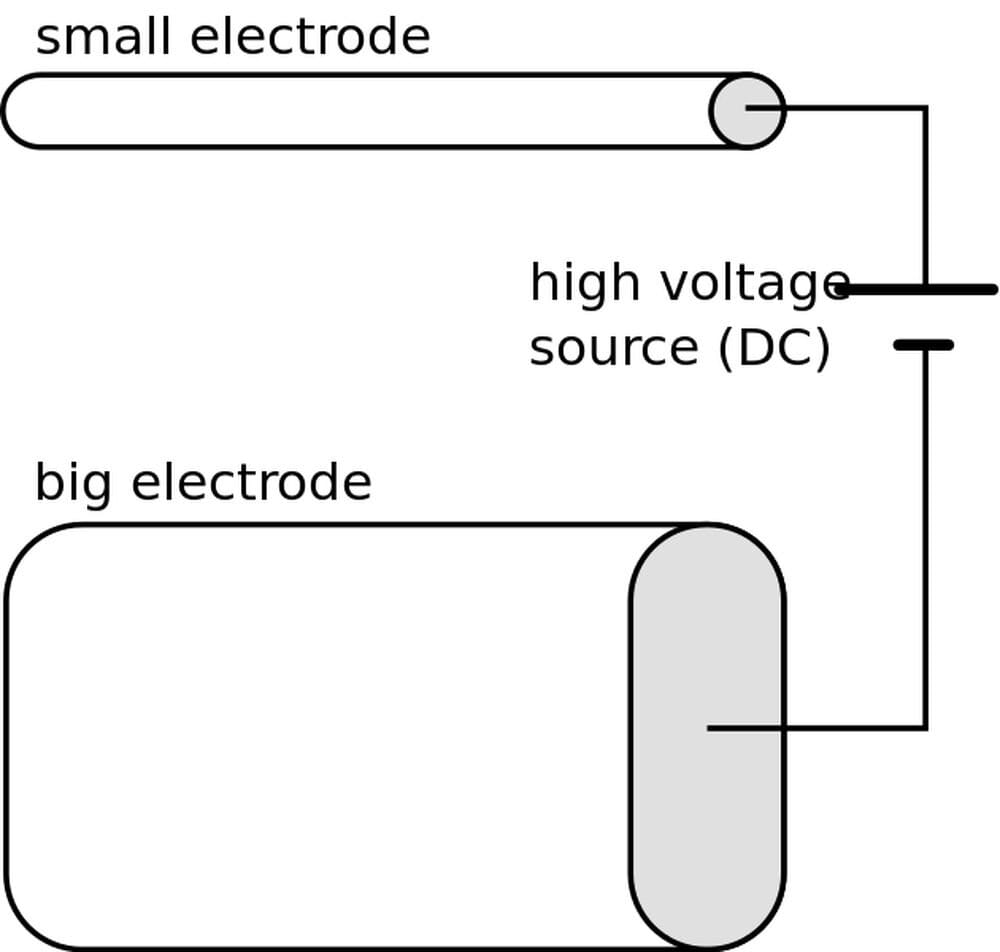

How It Works (The Official Version)
Mainstream physics explains the effect through electrohydrodynamics — essentially, "ion wind":
- The intense electric field near the sharp/thin electrode ionizes air molecules
- These ions accelerate toward the larger electrode
- Along the way, they collide with neutral air molecules, transferring momentum
- This creates a bulk air flow (ionic wind) that produces thrust
Under this explanation, the effect is nothing exotic — just charged particles pushing air around. And in a vacuum, it should disappear entirely.
The Problem With the Official Story
Here's where it gets interesting. Brown and others have consistently reported results that don't fit the ion wind explanation:

Vacuum Chamber Tests
Brown claimed his devices worked better in vacuum, not worse. This directly contradicts the ion wind theory — if there's no air, there should be no thrust.
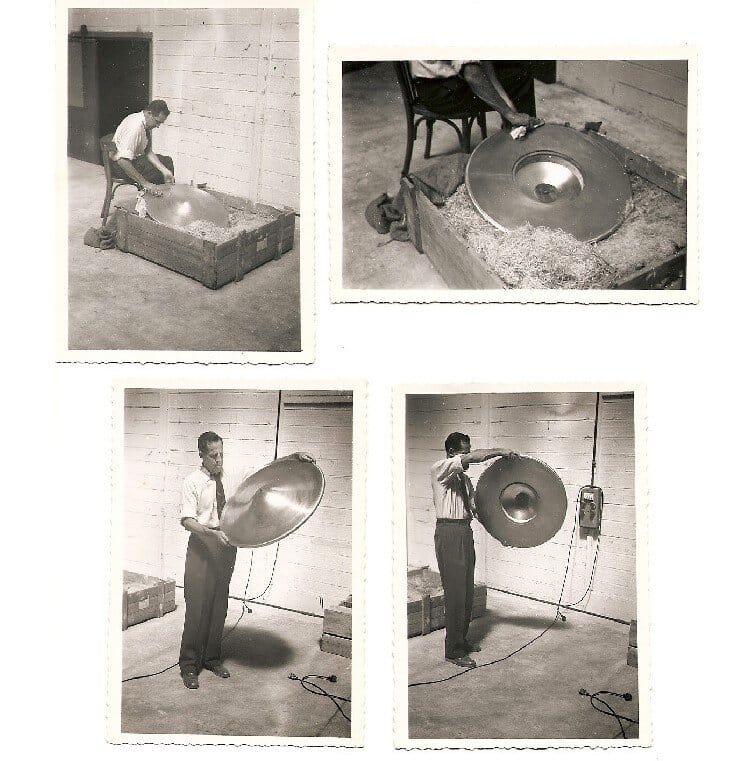
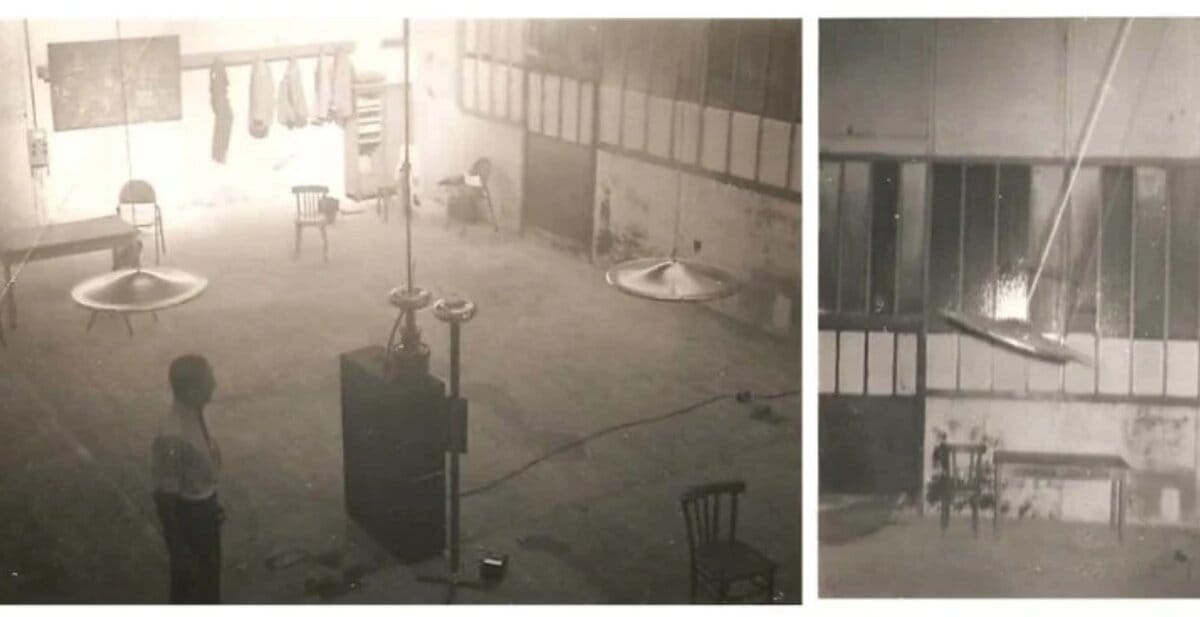
- In 1955-1956, Brown conducted experiments in Paris at the French aerospace company SNCASO (Société Nationale des Constructions Aéronautiques du Sud-Ouest), known as Project Montgolfier
- The project used 2.5-foot diameter discs suspended from 4-meter tethers on a rotating arm
- When tests moved to vacuum chambers, Brown reported the discs flew with even greater efficiency
- Jacques Cornillon, SNCASO's U.S. technical representative, witnessed and documented these results
The Cornillon Testimony
Jacques Cornillon (1910-2008) was instrumental in arranging Brown's Paris experiments. Near the end of his life, he provided testimony confirming:
- The vacuum experiments produced a positive result
- The force exceeded what was observed in air
- A detailed 12-page report on the vacuum experiments exists and is available online
His files were passed to Brown's biographer Paul Schatzkin, who had them translated from French.
NASA's Own Data
Despite Wikipedia claiming "in vacuum the effect disappears," NASA's own experiments at pressures of 1.72×10⁻⁶ Bar showed the effect persisted. The 1952 Office of Naval Research evaluation also documented thrust in vacuum tests — they just attributed it to residual ion effects.
The Weight Change Mystery
Brown's earliest and most fundamental observation was about weight change, not air movement. When a charged capacitor was placed on a scale:
- Positive electrode up → weight decreased
- Positive electrode down → weight increased
This occurred inside sealed containers where no ion wind could escape. As Russian researcher V.N. Vlasov noted: "In the capacitor being studied, there was no ionic wind and no corona wind. Wikipedia's owners are consciously distorting the truth."
Brown's Patents
Brown secured multiple patents that document his devices in technical detail:
| Patent | Title | Year |
|---|---|---|
| GB 300,311 | Method for producing force or motion | 1928 |
| US 1,974,483 | Electrostatic Motor | 1934 |
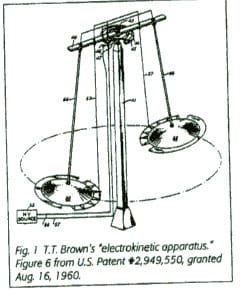
| US 2,949,550 | Electrokinetic Apparatus | 1960 |
| US 3,018,394 | Electrokinetic Apparatus | 1962 |
| US 3,022,430 | Electrokinetic Generator | 1962 |
| US 3,187,206 | Electrokinetic Apparatus | 1965 |
| US 3,196,296 | Electric Generator | 1965 |
Of particular note is US 3,187,206 (1965), which explicitly describes the apparatus operating in vacuum and claims the force persists — contradicting the standard ion wind explanation.
Project Montgolfier: The Paris Experiments
In 1955 and 1956, Brown made two trips to Paris to conduct experiments with SNCASO, one of France's leading aerospace companies. The project was named Project Montgolfier — after the Montgolfier brothers who pioneered hot air balloon flight in France.
The experiments had two phases:
Phase 1: Air Tests
- Flying disc carousel experiments using 2.5-foot diameter discs
- Discs were hung from tethers on a rotating arm
- Under high voltage, the discs rotated at impressive speeds
- Nearly identical to tests Brown had demonstrated to the Navy at Pearl Harbor
Phase 2: Vacuum Tests
- Conducted in SNCASO's vacuum chambers
- Brown reported positive results — thrust persisted and even increased
- These results were documented in the Montgolfier Project report
- The original French report by Cornillon is available on the Internet Archive
Brown made an interesting distinction during these experiments: he told SNCASO that "static counterbary" (weight reduction at rest) was classified, while "dynamic counterbary" (thrust during motion) was open for discussion. He later appeared to retract this distinction.
Funding was cut when SNCASO merged with another company (SNCASE), forcing Brown to return to the United States in 1956.
The Bahnson Laboratory (1958-1960)
After returning from France, Brown worked with Agnew Bahnson Jr. at a private laboratory in Winston-Salem, North Carolina. Bahnson was a wealthy industrialist fascinated by anti-gravity research.
Silent 8mm film footage from this period — shot by Bahnson's young daughter — shows disc-shaped devices being tested in the lab. This footage, compiled into a 5-minute video, is available on the ttbrown.com website and YouTube.
Brown and Bahnson set up Rand International Limited, an anti-gravity corporation. But the research remained underfunded and outside the mainstream.
The Lifter Community
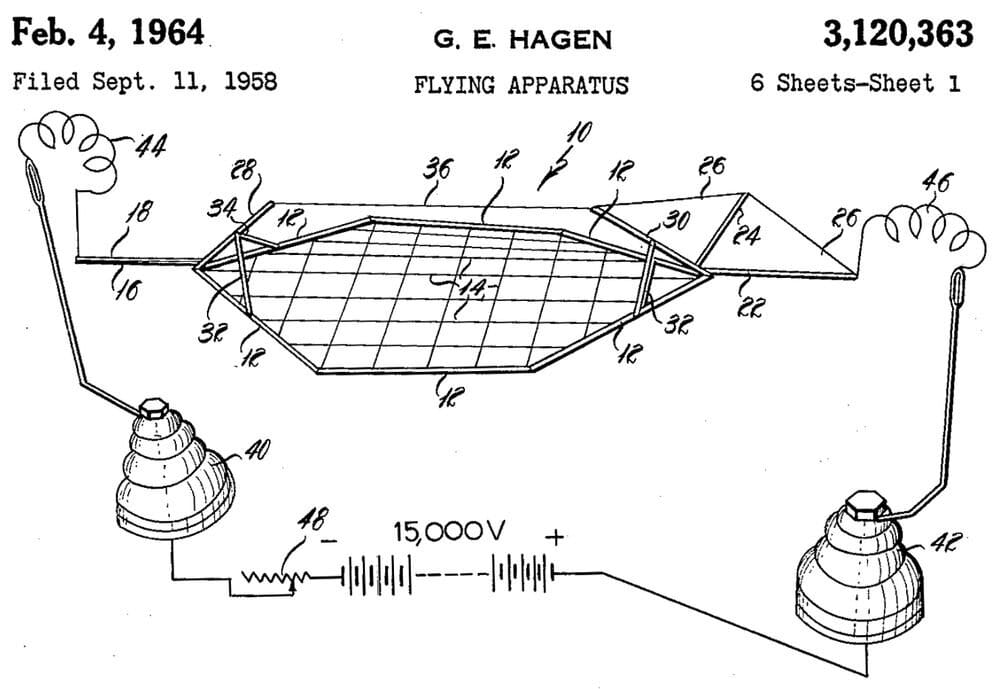
Despite suppression at the institutional level, Brown's basic experiments proved easy to replicate. Starting in the early 2000s, a global community of hobbyists began building "lifters" — lightweight frames of balsa wood and aluminum foil that demonstrably lift off when charged with high voltage.
The most prominent early experimenter was Jean-Louis Naudin (JLNLabs, France), who documented hundreds of lifter variations on his website. The phenomenon was real, reproducible, and spectacular on video.
The establishment dismissed lifters as "just ion wind" — and for the basic air-based models, that explanation works. But it doesn't explain:
- Why Brown reported greater thrust in vacuum
- Why the force persists after power is removed (in certain configurations)
- Why the fine structure constant (α) appears in force measurements
- Why the Army Research Laboratory's own paper (2002) by Thomas Bahder and Chris Fazi found results consistent with Brown's claims

The Suppression Question
Was Brown's work deliberately suppressed? The evidence is circumstantial but compelling:
- Military interest followed by silence: The Navy, Air Force, and aerospace companies (Glenn L. Martin, Lockheed, SNCASO) all evaluated Brown's work — then nothing
- The 1952 ONR report: Acknowledged thrust but closed the door on further investigation
- CIA infiltration of NICAP: After Brown founded the civilian UFO research organization, CIA officers were embedded in it
- Patent classification risk: The Invention Secrecy Act of 1952 allows the DoD to classify patents deemed relevant to national security. Some of Brown's patents may have been affected
- Industry advertising then silence: In the mid-1950s, Glenn L. Martin Company placed ads looking for scientists "interested in gravity" — then the entire field went quiet
- Nick Cook's investigation: The Jane's Defence Weekly aviation editor traced 1950s gravity research and concluded it simply vanished — likely into classified programs
As Gerry Vassilatos wrote in Lost Science:
"Stigma, tech protection, and scientific suppression are all very real. Brown's work is still likely classified by the Navy to this day."
The Japanese Experiments
Brown wasn't the only one to find results. A team in Japan, believed to have come out of Honda, led by researcher Musha, submerged capacitors in transmission oil — which doesn't ionize — and claimed positive results. Their paper was never retracted, though the team went silent.

What Brown Really Found
Stripping away decades of stigma and dismissal, what Brown demonstrated repeatedly was:
- Asymmetric capacitors produce directional thrust when charged to high voltage
- The thrust is toward the positive electrode (or toward the smaller electrode)
- The effect scales with voltage squared and with the dielectric constant of the material between electrodes
- The effect persists in vacuum (multiple independent confirmations)
- Weight changes are measurable on scales — not just thrust from air movement
- The effect may persist after power is removed — the charged capacitor continues to produce force
Whether this constitutes "anti-gravity" or represents a new force within quantum electrodynamics — or something else entirely — remains the central question.
And as we'll see in Part 3, a NASA scientist with 26 years of electrostatics experience is now producing the most rigorous data yet on this very question.
Sources:
- Wikipedia: Biefeld-Brown effect
- Starburst Foundation: Release of Project Montgolfier Report
- Internet Archive: Montgolfier Project Original French (Jacques Cornillon)
- ttbrown.com: Bahnson Lab Footage, Research Archives
- ArXiv: "Force on an Asymmetric Capacitor" (Bahder & Fazi, Army Research Lab, 2002)
- ScienceDirect: "An analysis of the Brown-Biefeld effect"
- V.N. Vlasov, "Condensator Starship" (trinitas.ru)
- Nick Cook, The Hunt for Zero Point
- Gerry Vassilatos, Lost Science
Previous: Thomas Townsend Brown: The Forgotten Father of Anti-Gravity
Next: From Brown to Buhler: The New Force That Could Replace Rockets